
 ไทย
ไทย English
 中文 (中国)
 العربية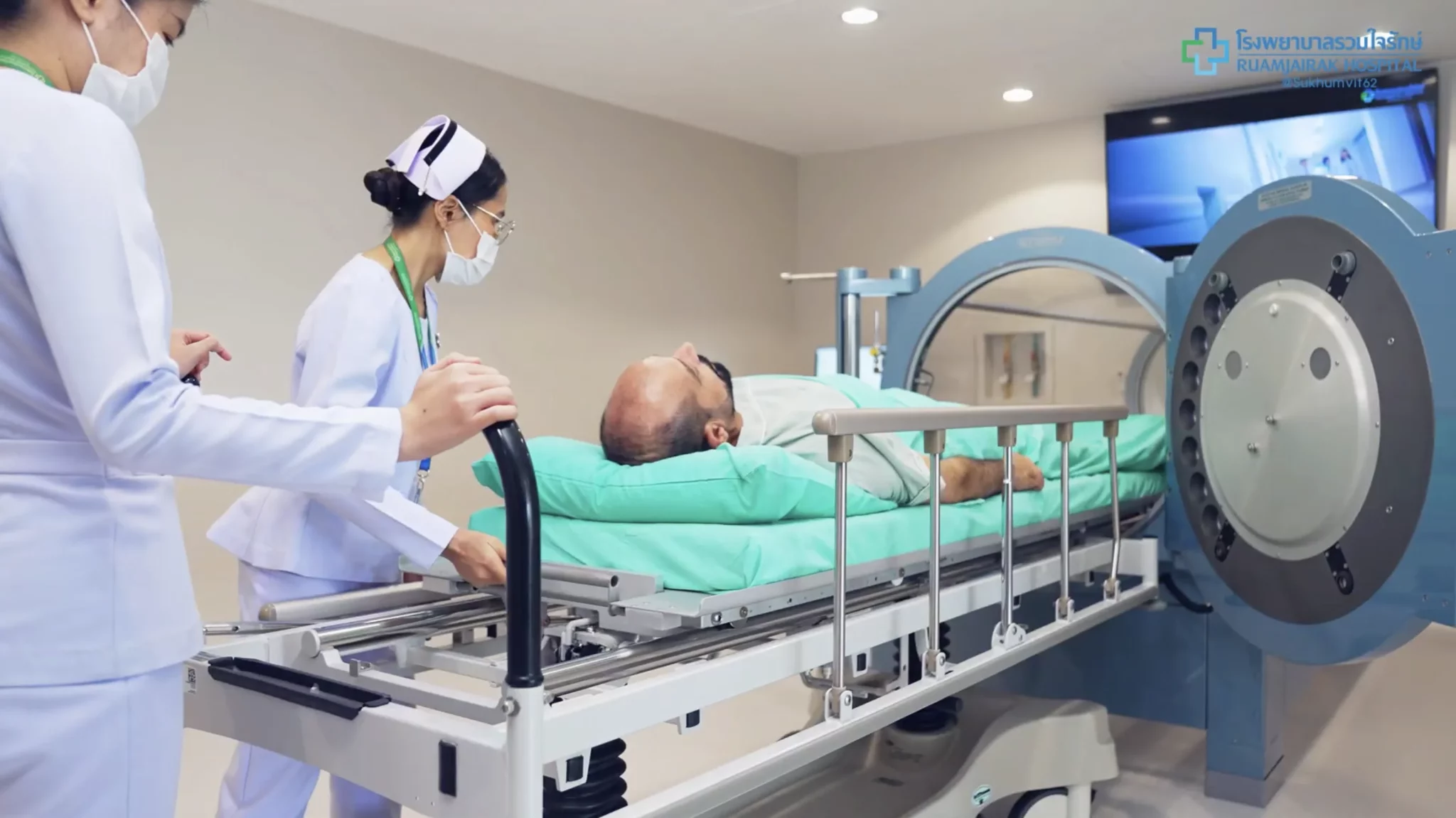
Hyperbaric Oxygen Therapy Center
Hyperbaric Oxygen Therapy Center Center
09.00 - 19.00
Boost Oxygen Delivery to Your Tissues
with Hyperbaric Oxygen Therapy
The use of HBOT depends on medical indications and a physician’s assessment. Results and the number of treatment sessions may vary from person to person.

What Is HBOT?
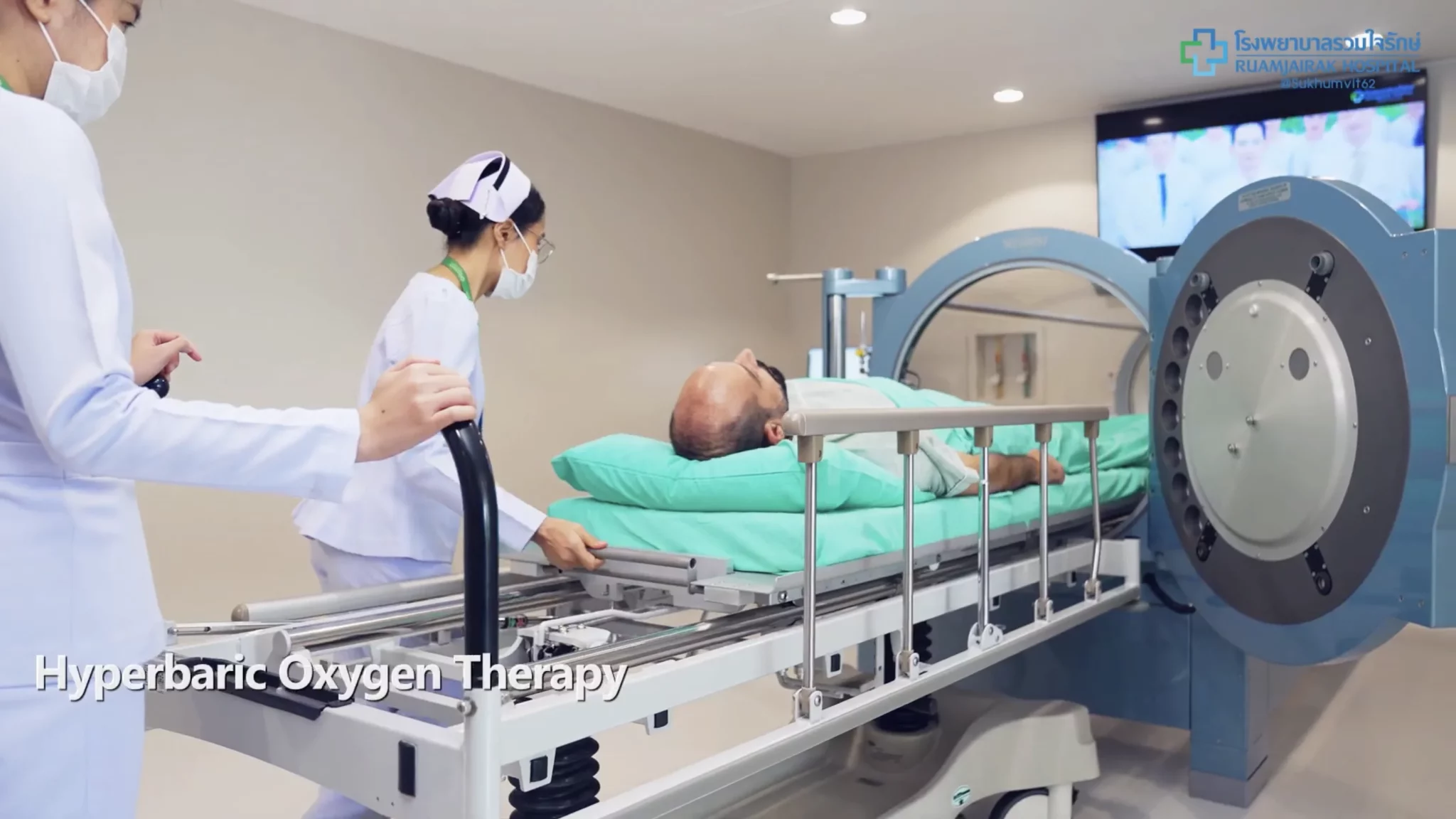
Hyperbaric Oxygen Therapy (HBOT) is a treatment in which a patient breathes oxygen inside a hyperbaric chamber at a pressure higher than normal atmospheric pressure. As the pressure increases, the amount of oxygen dissolved in the blood plasma can increase, allowing the body to deliver more oxygen to tissues that are not receiving enough.
HBOT is therefore used as part of the treatment plan for certain medical conditions, and physicians evaluate the indications, benefits, and risks for each individual. The key point is not simply inhaling extra oxygen, but receiving oxygen under controlled pressure according to a protocol set by the physician.
How Does HBOT Work?
Under appropriate pressure, the body can take in more oxygen, which may support tissue recovery in suitable medical indications.
Increases the Oxygen Your Body Receives
Under pressure higher than normal atmospheric pressure, the lungs can take in more oxygen than they can at normal pressure.
Increases Oxygen in the Plasma
More oxygen can dissolve in the plasma, which may increase the oxygen delivered to tissues in certain conditions where oxygen supply is insufficient.
Supports Tissue Repair
In suitable indications, higher oxygen levels may help support wound healing and tissue recovery.
Which Conditions Can HBOT Help Treat?
HBOT is a medical treatment with specific indications. In many conditions, it is used alongside other standard treatments and does not replace the primary treatment.
Certain Types of Chronic Wounds
HBOT may be used as an adjunct treatment for some patients with diabetic wounds, or for wounds that do not respond adequately to standard care. Each patient must be evaluated individually.
Radiation-Induced Tissue Injury
Physicians may consider HBOT for certain patients whose soft tissue or bone has been damaged after radiation therapy.
Carbon Monoxide Poisoning
HBOT may be used for patients with carbon monoxide poisoning, depending on the severity, symptoms, and the physician’s judgment.
Decompression Sickness
Decompression sickness is one of the conditions for which oxygen therapy under high pressure plays an important role, particularly in diving medicine.
Certain Traumatic Ischemic Injuries
For crush injuries, compartment syndrome, or certain other injuries that cause tissue ischemia, physicians may consider HBOT in combination with other treatments.
At-Risk Skin Grafts or Flaps
HBOT may be considered as an adjunct treatment when a skin graft or tissue flap is at risk of receiving insufficient blood and oxygen supply.
The evidence for using HBOT for exercise recovery, fatigue reduction, sleep, anti-aging, or wellness differs from that for established medical indications. Therefore, the benefits, suitability, and limitations should be evaluated by a physician before treatment.
Who Should Consult a Physician About HBOT?
If you have any of the following conditions, you can schedule an assessment so that a physician can determine whether HBOT is appropriate and may benefit your treatment.
- ✓You have a chronic wound or a wound that heals slowly
- ✓You have a diabetic wound that has not responded to standard care
- ✓You have tissue damage following radiation therapy
- ✓You have a skin graft or flap that a physician has assessed as being at risk
- ✓You have another medical condition for which a physician believes HBOT may be part of the treatment plan
- ✓You would like to assess whether HBOT is suitable for health restoration and wellness before making a decision
Systematic Care from Assessment to the End of Treatment
HBOT planning should take into account the indication, health condition, underlying diseases, risks, and treatment goals of each individual.
Health Assessment Before Treatment
We review your health history, underlying conditions, and current medications, as well as any factors that may affect the safety of HBOT.
A Plan Tailored to Each Individual
The number of sessions, the duration, and the treatment approach are determined according to your health condition, the indication, and your individual response.
Monitoring Throughout Treatment
Your symptoms are monitored and your safety is assessed throughout the entire treatment process.

HBOT Treatment Process
Consultation and Health Assessment
The physician takes your medical history and assesses your health condition, underlying diseases, and current medications, as well as your suitability before treatment begins.
Undergoing Treatment
You enter the hyperbaric chamber and receive oxygen according to the protocol set by the physician, with your symptoms monitored throughout the session.
Post-Treatment Assessment
After treatment ends, the care team performs a preliminary assessment of your symptoms and plans your next session if necessary.
Safety Information to Know Before HBOT
HBOT can generally be performed safely when patients are properly assessed and cared for. However, changes in pressure and exposure to high concentrations of oxygen may cause some side effects.
Possible Side Effects
- Ear fullness or ear pain caused by pressure changes
- Fullness or discomfort in the sinuses
- Fatigue after treatment in some patients
- Temporary changes in vision in some cases
- Anxiety in people who are not comfortable in enclosed spaces
Tell Your Physician If You Have Any of the Following
- A lung disease or disorder
- A history of pneumothorax (air leak in the space around the lungs)
- A cold, nasal congestion, or sinus problems
- An ear disease or a history of ear surgery
- You are pregnant or suspect that you may be pregnant
- You have underlying conditions or take regular medications
People with untreated pneumothorax, or with health conditions that may be affected by pressure, should be assessed by a physician before HBOT is considered.
Frequently Asked Questions About HBOT
How is HBOT different from ordinary oxygen inhalation?
HBOT delivers oxygen at a pressure higher than normal atmospheric pressure, whereas ordinary oxygen therapy is delivered at normal atmospheric pressure.
How many HBOT sessions are needed?
There is no number of sessions that suits everyone. The number depends on the indication, the severity of the condition, your response to treatment, and the treatment plan set by your physician.
What does it feel like inside the chamber?
While the pressure is increasing or decreasing, you may feel ear fullness or a popping sensation, similar to what you feel when an airplane takes off or lands. Staff will teach you how to equalize the pressure in your ears and will monitor your symptoms throughout the session.
Is HBOT painful?
The procedure generally does not cause pain, but you may feel pressure in your ears or sinuses while the pressure is changing.
Is recovery time needed after treatment?
Most patients can return to their daily activities, although this depends on your health condition and the reason for treatment.
Can HBOT be used for anti-aging or wellness?
HBOT has been studied for several health and restorative purposes. However, the level of evidence for anti-aging, sleep, or wellness differs from that for established medical indications, so each individual should be assessed on a case-by-case basis.
Not Sure Whether HBOT Is Right for You?
Start by consulting a physician to assess the indications and your health history, and to plan a treatment that suits your individual physical condition.
Important information: The content on this website is intended to provide health education and cannot replace a medical diagnosis or advice from a physician. The suitability of Hyperbaric Oxygen Therapy (HBOT) depends on the indication, your health condition, and an individual assessment by a physician. Results may vary from person to person.

Maritime Medicine

Endocrinology

Surgery